
Leadership today is being redefined not through strategy documents or annual retreats, but through learning itself. A decade ago, development programs were aimed primarily at entry-level employees and new managers. Now, learning has climbed to the top of the corporate ladder. Companies are investing heavily in training their mid-level and senior leaders, while executives are Realizing that leadership is not a static position but an ongoing discipline. The most effective leaders are not just managing disruption; they are learning to transform under pressure.
Breakdown
Across industries, learning has moved from being an optional benefit to becoming a strategic priority. Data from Great Learning shows that demand for training among mid-level employees rose to 35 percent in FY25 from 15 percent in FY24, while senior-level learning initiatives more than doubled in the same period. These numbers reveal a clear shift in mindset: learning is now seen as an investment in competitiveness rather than a corrective exercise.
Middle managers sit at the centre of this transformation. They translate ideas into execution and connect strategy with operations. When equipped with technological fluency and cross-functional thinking, they help innovation move faster from concept to delivery. Senior leaders, on the other hand, are realising that digital and AI literacy is essential for turning investments in technology into measurable outcomes.
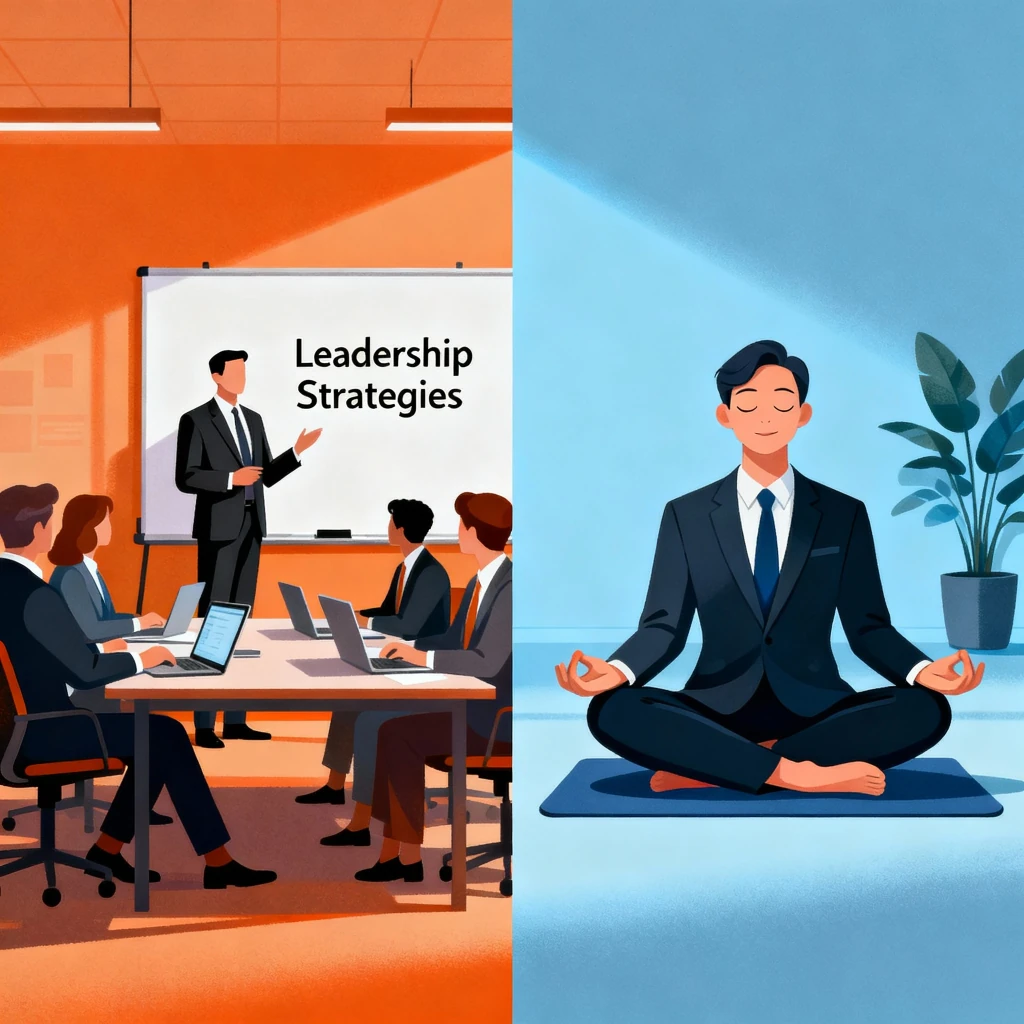
At a personal level, leadership is also being reshaped through the principles of performance psychology. Founders and CEOs are learning that thriving under pressure begins with mastering their internal state. Stress does not come from events themselves but from how leaders respond to them. High-performing leaders train themselves to stay calm, confident, and focused, even when the stakes are high.
Performance psychology highlights three essential pillars for consistent performance: a calm body, a confident mind, and a focused spirit. These qualities form a foundation for clear decision-making and resilient leadership. As automation replaces routine work, human value increasingly lies in emotional stability, creative thinking, and sound judgment under pressure. Leaders who cultivate these traits become more effective at guiding teams through uncertainty and change.
Why This Matters
Together, these developments signal a new understanding of leadership capability. The World Economic Forum identifies skill gaps as the biggest barrier to transformation, while McKinsey and Gartner Emphasize that leadership readiness, not technology, is the main challenge in AI adoption. Learning has become the infrastructure of competitiveness. At the same time, self-mastery is emerging as a vital form of leadership intelligence. Calm and clarity are not soft skills; they are essential to leading in complex environments.
The Big Picture
The convergence of Organizational learning and individual growth defines the new curriculum of leadership. Companies are Institutionalizing continuous learning through skill assessments, role-specific programs, and measurable development goals. Leaders are pairing this external learning with internal growth, embracing acceptance, adaptability, and service as part of their professional journey. The leaders of the future will be distinguished not just by their expertise in strategy and technology, but by their ability to learn, unlearn, and lead effectively under pressure.
The Crunch
The next generation of leadership will belong to those who treat learning as a lifelong discipline. For Organizations, this means creating ecosystems that encourage continuous curiosity and skill-building. For individuals, it means cultivating calm, confidence, and focus to think clearly amid uncertainty. The future of leadership will be defined by those who can learn faster, adapt better, and act with composure when it matters most.