
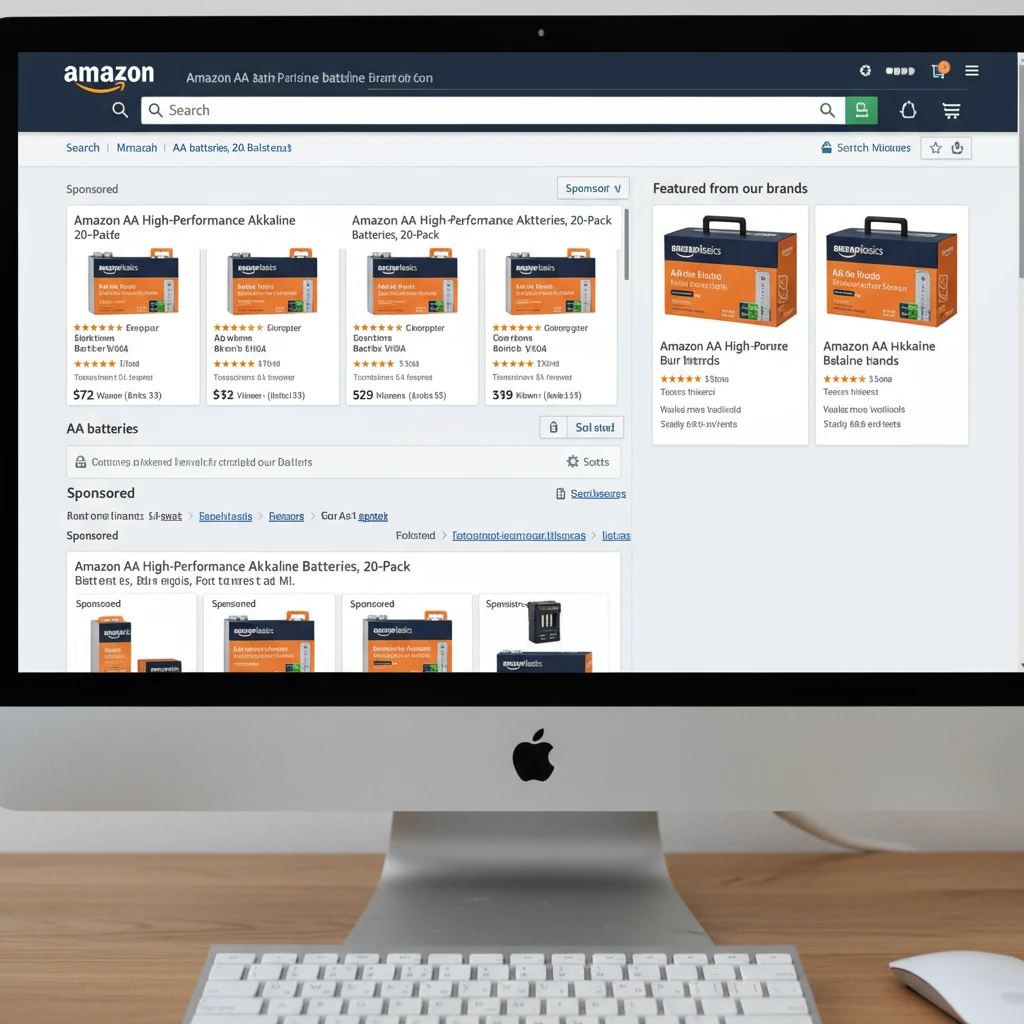
If you have searched for something as simple as AA batteries or a desktop microphone on Amazon recently, you may have noticed a pattern. A “Featured from our brands” section appears at the top, followed by a wall of “Sponsored” listings, before you reach the genuine search results. This is not coincidence. Investigations and regulatory probes suggest that Amazon’s search results are increasingly designed to serve its own interests rather than those of the shopper.
Breakdown
Independent analyses show that Amazon’s private labels, such as Amazon Basics and Amazon Essentials, receive prominent placement on search result pages. The company describes these spots as “merchandising features,” but studies reveal that they often function like paid advertisements. These listings appear to be organic but are strategically placed to favour Amazon’s own products over independent sellers.
The United States Federal Trade Commission’s ongoing antitrust case claims that Amazon has compromised search quality by replacing relevant results with paid ads, effectively forcing sellers to spend heavily on advertising just to appear in front of shoppers. A separate investigation opened in September is examining how Amazon’s ad auction system determines which products receive visibility.
Amazon maintains that it is focused on customers, not brand preference. However, accusations that it has used non-public seller data to guide its private-label strategy have persisted. In Europe, Amazon agreed in 2022 not to use marketplace seller data for its retail arm and to make Prime and Buy Box access more transparent. In India, reports suggested internal efforts to replicate popular third-party items under labels such as Amazon Basics and Solimo, raising further scrutiny of how its in-house products compete with independent brands.
Why This Matters
Amazon’s marketplace has evolved into both a retail platform and an advertising network. Sellers pay subscription fees, referral commissions, and advertising costs to gain visibility, while Amazon’s own brands bypass these expenses. This structural advantage allows Amazon to offer lower prices and claim the most prominent digital shelf space, even when competing products may offer better value.
For shoppers, the problem is less obvious but equally important. Trust signals such as “Amazon’s Choice” or “Overall Pick” often appear alongside sponsored listings, making it difficult to distinguish between merit-based recommendations and paid promotions. What appears as an unbiased suggestion can instead be a placement designed to maximise Amazon’s profits.
The Bigger Picture
Amazon’s model reflects a wider transformation in online retail, where search results function as prime advertising real estate. Its retail media business has become one of its fastest-growing revenue streams. This benefits Amazon’s financial performance but raises concerns about transparency, fair competition, and consumer choice.
Regulators across major markets are beginning to intervene. The European Union now enforces stricter rules requiring separation between paid and organic search results and oversight of how platforms promote their own brands. The FTC’s case in the United States could bring similar guardrails, potentially reshaping how product visibility is sold. For sellers, the outcome could determine whether small businesses can still compete. For consumers, it could restore trust in the credibility of search results.
The Crunch
Amazon Basics products are rarely poor in quality, but they are not always the best option. Their biggest advantage lies in Amazon’s ability to feature them first. For shoppers, the takeaway is simple: scroll further, compare specifications carefully, and do not assume that the top result is the best deal. For sellers, the reality is that the marketplace has become a high-stakes advertising ecosystem where visibility often matters more than value.
The convenience that once defined Amazon now comes with a trade-off. The platform offers ease for the customer but Prioritizes profitability for itself. In today’s marketplace, understanding how search results are shaped is just as important as the products themselves.