
When we think of nature, we usually imagine something untouched and pure. However, that idea is becoming harder to define. Today, human influence reaches almost every corner of the planet, from microplastics found in wildlife to artificial light deep in the Arctic. As a result, the very meaning of nature is starting to shift. This raises a deeper question. If nature is already altered, should technology now be used not just to change it, but to restore it?
Breakdown:
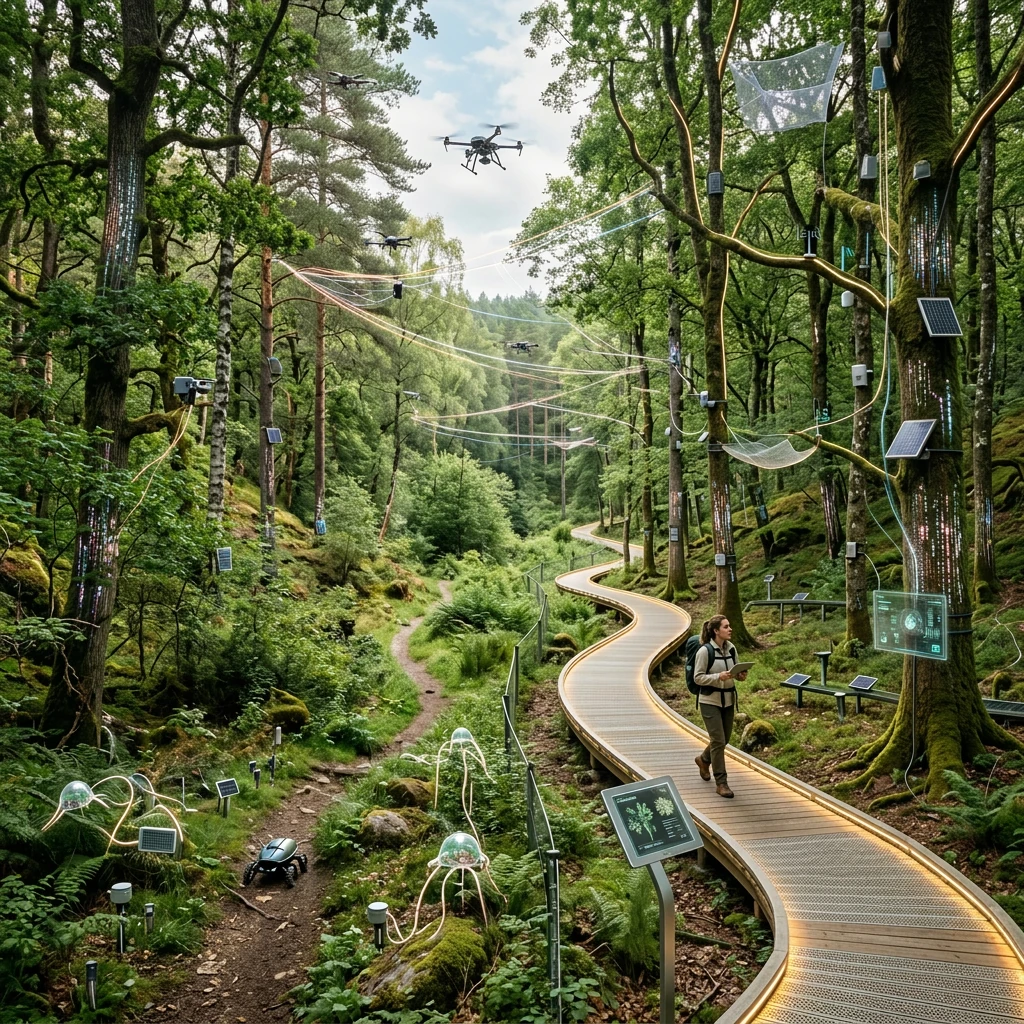
The traditional idea of nature as something separate from human activity is becoming outdated. Over time, industrialization, urbanization, and technological progress have reshaped ecosystems in ways that are often invisible but deeply impactful. For instance, pollutants now travel through air, water, and soil, affecting environments far removed from their source. At the same time, technological interventions have begun to blur the line between what is natural and what is engineered.
Because of this, scientists and researchers are rethinking how we define and interact with the natural world. In some cases, technology is being used to repair environmental damage, such as restoring ecosystems or protecting endangered species. In other cases, it is creating entirely new versions of nature, from genetically influenced organisms to artificially maintained environments. This creates a paradox. While technology is often seen as the cause of environmental disruption, it is also being positioned as a potential solution.
At the same time, this shift is not just scientific but philosophical. If nature is no longer untouched, then the idea of preserving it in its “original” form becomes complicated. Instead, the focus may move toward managing and reshaping it in a way that balances human needs with ecological stability. However, this also raises concerns about control and unintended consequences, since intervening in complex systems can produce outcomes that are difficult to predict.
Why this matters:
This shift fundamentally changes how we think about nature and responsibility. If human influence is now unavoidable, then preservation alone may no longer be sufficient as a strategy. Instead, active management and intervention may become necessary to maintain ecological balance. At the same time, this increases the responsibility placed on how technology is used, because the same tools that caused disruption are now being relied upon to fix it. As a result, the focus is no longer just on progress, but on achieving a sustainable balance between human activity and the natural world.
The Big Picture:
More broadly, this reflects a deeper transformation in humanity’s relationship with the planet. The long-standing idea that nature and technology exist as separate domains is gradually becoming irrelevant. Instead, the two are increasingly intertwined, shaping each other in complex ways. As this continues, the future may not be about returning to a purely natural state, but about consciously designing systems that are sustainable and resilient. Therefore, the challenge ahead is not simply technological innovation, but the ability to guide that innovation with foresight, responsibility, and long-term thinking.
The Crunch:
Nature is no longer something we observe from a distance. Instead, it has become something we actively shape. This means the real question is no longer whether we should intervene, but how we choose to do so, and what consequences we are willing to accept.