
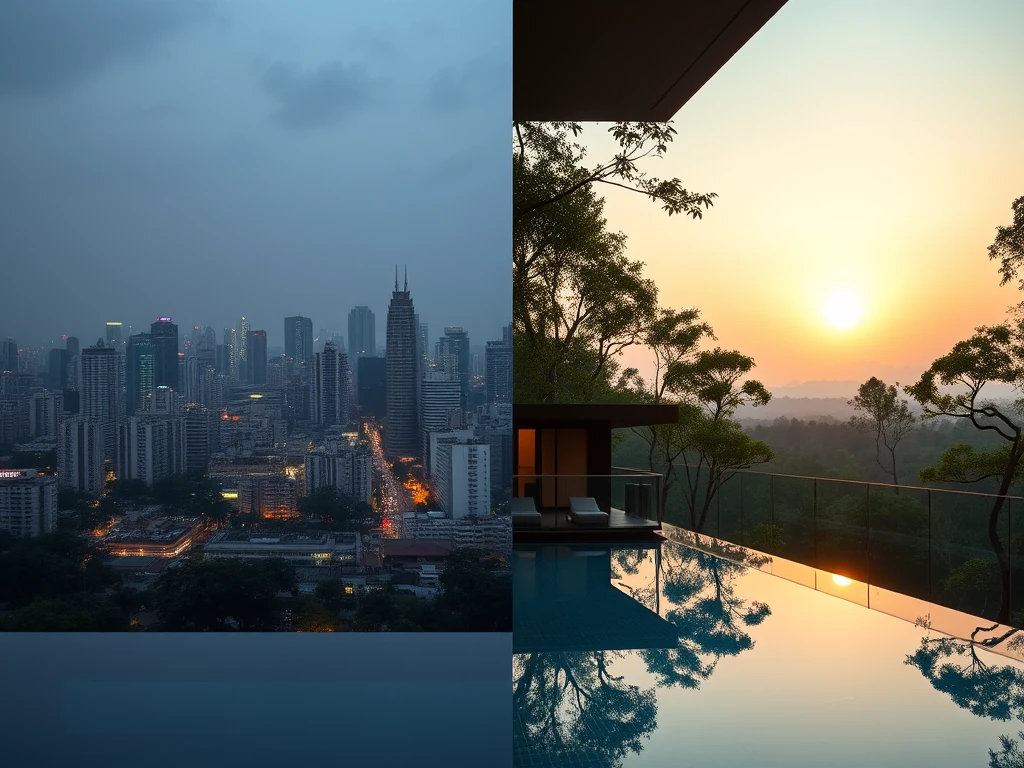
Something unusual is happening in Mumbai’s luxury market. The city’s wealthy are not flying out to relax anymore. They are driving an hour or two to unwind in villas, resorts, and nature retreats. The rise of the staycation is not a trend that will fade. It is changing how people spend, how they invest, and how they imagine a better quality of life. At the centre of this shift sits Chowk–Panvel, a region that has quietly emerged as the preferred escape for high earners who want indulgence without effort.
Breakdown:
The staycation boom started as a pandemic-era shortcut but has grown into a lifestyle shift for Mumbai’s affinity class. Time is the new luxury and a quick drive to a resort beats a long airport queue. High speed internet, gourmet dining, family friendly villas, and wellness spaces make these short trips feel effortless but indulgent.
Industry leaders see the shift clearly. Puneet Chhatwal of Indian Hotels Company notes that short format trips are now a core business driver. The data backs this up. India’s hospitality industry is projected to reach USD 263.2 billion in 2025 with resorts and wellness retreats among the fastest growing formats. Luxury hospitality alone is expected to grow more than 13 percent each year until 2030, with West India contributing significantly.
This brings the spotlight to Chowk–Panvel. It offers fast road connectivity, clean air, forests, river views, and a solid hospitality ecosystem with Radisson Blu Karjat, Forest Club Resort, Oleander Farms, and Saltt. The villa market here is expanding with nature linked communities and resort style amenities such as World Villas by Arihant Superstructures. This region is now the unofficial backyard of Mumbai’s elite.
The staycation habit has also pushed a surge in second home purchases. Buyers are turning villas into yield generating assets that deliver rental income, capital appreciation, and long term family value. As Patu Keswani of Lemon Tree Hotels puts it, second homes now sit in the wellness portfolio of affluent families.
The future belongs to gated villa communities that offer privacy, wellness spaces, club facilities, and professional rental management. These homes function as lifestyle infrastructure rather than simple real estate.
Why this matters:
The staycation surge highlights how urban India is changing its relationship with time, comfort, and wellness. For hospitality players it signals a long runway for premium short stay formats. For real estate developers it marks a shift toward gated villa communities rather than traditional apartments. For investors it creates a new asset class that blends lifestyle and returns. For families it shows a move toward local experiences that offer emotional value without heavy planning. The rise of staycations is shaping consumption patterns, wealth planning, and even how people define a break.
The Big Picture:
Around the world short stay luxury is rising as cities become more stressful and travel becomes more complicated. India is now joining the same curve seen in Bali, Tuscany, and Napa where weekend retreats have turned into full blown lifestyle markets. As connectivity improves in regions like Panvel, Karjat, and Alibaug these micro destinations are becoming the natural extensions of metro living. It hints at a future where city dwellers build parallel lives in nature rich pockets just outside the urban boundary.
The Crunch:
Staycations are more than convenience. They reveal what affluent India values today. Less noise. More nature. Less friction. More meaning. Chowk–Panvel is becoming the place where Mumbai’s wealthy recharge, invest, and plant long term roots. The escape is becoming a strategy.