
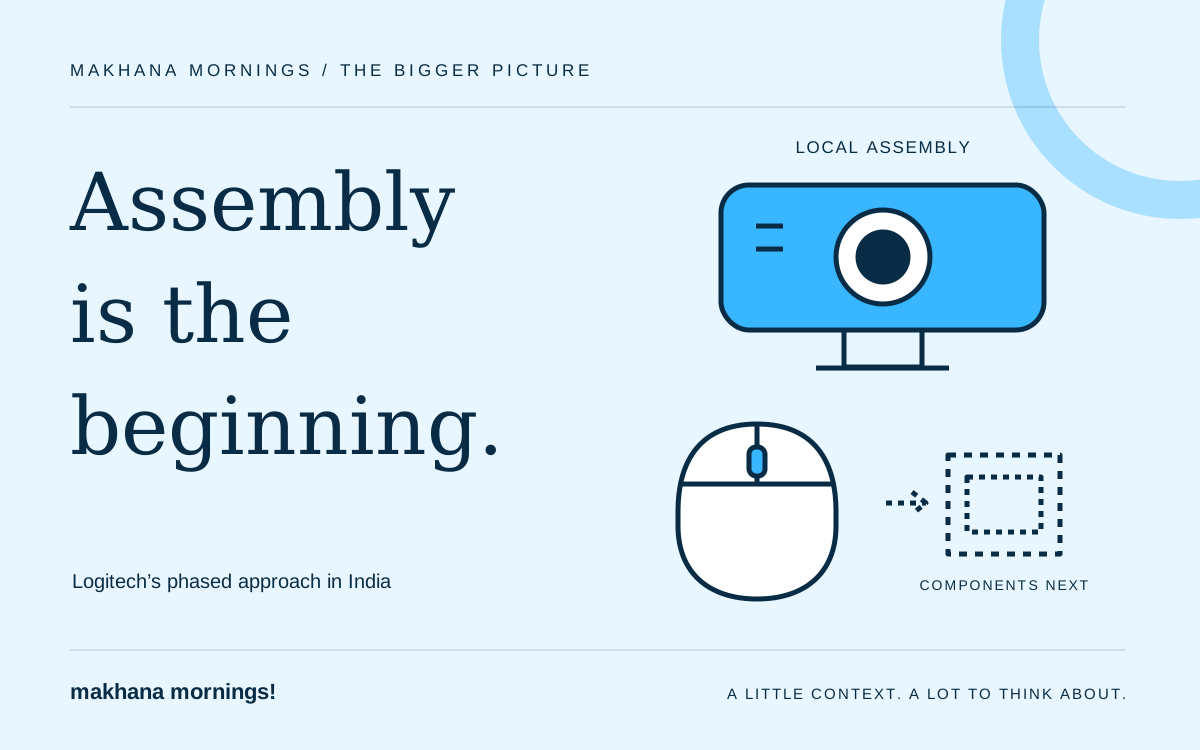
The next webcam on an Indian office desk could have a shorter trip to get there.
On October 15, Logitech said it had begun putting together webcams and pointing devices, including mice, in Manesar, Haryana. An Indian manufacturing partner is handling the work. The move brings production closer to the company’s Indian customers.
For India’s electronics industry, that raises a useful question. How much more of each product could be made in India over time?
The Breakdown
The first step is assembly, which means putting the parts together. Logitech’s executives say they plan to get production running smoothly before buying more parts from local suppliers. They have not set a date for that next step.
The company has not named its manufacturing partner. It has also not said how much it is investing or how many devices the line can make each year. Those gaps make it hard to judge the scale of the new operation.
Logitech already has a product-development centre in Chennai. The Manesar operation adds production to its work in India. It also puts that production closer to the market where the devices will be sold.
Why This Matters
For a company selling to offices, shops and individual buyers, being able to respond quickly matters. Making products closer to buyers can help it adjust supply when demand changes. It can also cut the distance that finished products travel. This is the business case Logitech has set out.
Buyers will feel the benefit only if the operation works well. Will the products they want be in stock? Will quality hold as the company makes more devices? Will deliveries become more reliable? Local assembly alone does not tell us what will happen to shop prices.
For Indian suppliers, the bigger chance may come at the next stage. Making parts is a different job from putting the finished product together. Suppliers must meet the required design and quality standards. They also have to deliver on time, again and again.
The Big Picture
An assembly line can be the start of a wider network of suppliers. If demand becomes easier to predict, making more parts nearby may make business sense. But that depends on costs, skills and demand that lasts. A new assembly line does not create all of those things on its own.
That is why the steps in Logitech’s plan matter. Production in India is the first milestone. The longer-term test is how much the company buys locally and what suppliers learn to make.
The Chennai centre also gives Logitech a role in product development in India. It is worth watching whether that work becomes more closely linked to local production. But we should not assume that every device put together in India was also designed here.
The Crunch
Logitech has started Indian assembly for webcams and mice. The next sign of progress will be evidence that it is buying more parts from local suppliers too.