
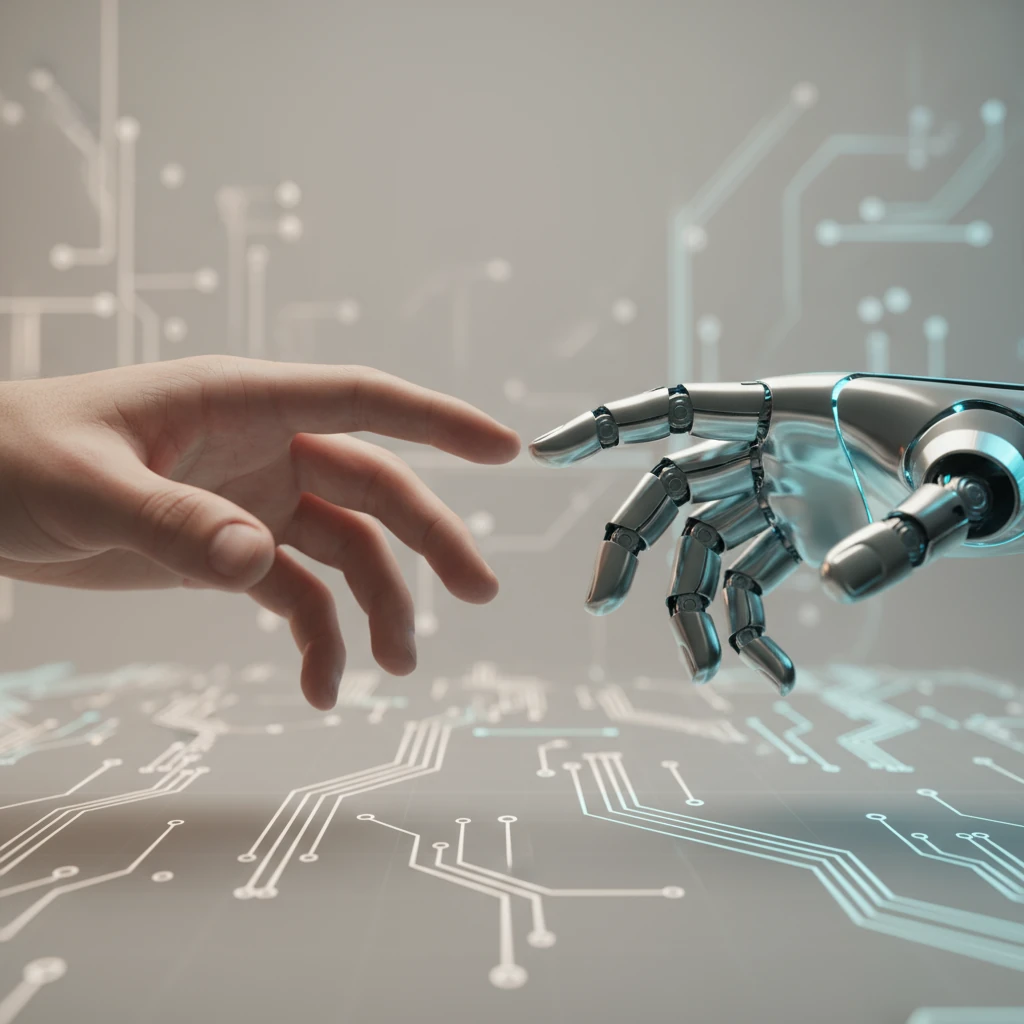
Artificial intelligence is no longer a distant concept. It is the most powerful force shaping how organizations work, decide, and grow. But amid the excitement and anxiety, a crucial truth is emerging. AI does not replace people, it amplifies them. Speaking at Oracle AI World, Larry Ellison called AI an incredible tool that can elevate human potential, describing it as a set of remarkable electronic brains capable of solving some of humanity’s hardest problems. Yet, as experts Herminia Ibarra and Michael Jacobides remind us, the value of AI will not come from the technology itself but from the way leaders use it to transform their organizations.
Breakdown
Ellison emphasized that AI is here to enhance human creativity, precision, and productivity, not to eliminate jobs or human purpose. “Some people think it is going to replace human beings and all of our human endeavours. I don’t think that’s true,” he said. Instead, he envisions AI empowering scientists, surgeons, engineers, and teachers to reach new levels of excellence.
That vision aligns with a broader shift in leadership thinking. To unlock AI’s potential, leaders must evolve their approach to management, culture, and learning. The HBR framework identifies five critical leadership capabilities for the AI era: spanning boundaries, redesigning organizations, orchestrating collaboration, developing talent, and leading by example.
The first is to span organizational boundaries. Leaders must build networks that expose them to new AI practices across industries, startups, and regulators. Collaboration beyond silos fosters both insight and foresight.
The second is to redesign organizations for an AI-augmented future. Technology cannot simply be added to old processes. Leaders must decide which tasks to automate, where humans add unique value, and how to structure workflows for agility and control.
Next, orchestrate team collaboration. AI is not a passive tool; it is an active teammate. Assigning it roles such as analyst or advisor allows human teams to challenge, verify, and improve on its suggestions. Building psychological safety is critical so teams can learn with the technology, not fear it.
As automation grows, coach and develop talent. Leaders should guide employees toward experimentation and problem solving, nurturing curiosity as a core skill. The goal is not to train workers to compete with machines, but to thrive alongside them.
Finally, lead by example. Leaders who use AI themselves, share how it helps them, and speak openly about the learning process signal that curiosity and adaptability are strengths, not risks. Their example creates a ripple effect, encouraging adoption across teams.
Why This Matters
Ellison’s view and the leadership framework converge on one idea: the future of AI is human centered. The organizations that will thrive are those where technology and leadership reinforce each other. When leaders model learning, promote experimentation, and empower teams, AI becomes a multiplier of human intelligence rather than a replacement for it.
The Big Picture
AI’s promise lies not in automation alone but in amplification. It enhances creativity, decision making, and problem solving across professions. It can help scientists innovate faster, educators personalize learning, and doctors diagnose more accurately. Yet this potential depends entirely on leadership. The new measure of success will be how effectively leaders combine technological fluency with empathy, vision, and courage.
The Crunch
AI will not replace leaders, but it will redefine leadership. The next generation of successful organizations will be built by leaders who view AI as a partner, not a threat. Those who use it to expand human possibility rather than constrain it will shape the future of work and innovation.