
Putting insurance online takes more than moving a policy onto a screen. The firms that collect, store and use the records also need to understand them in the same way.
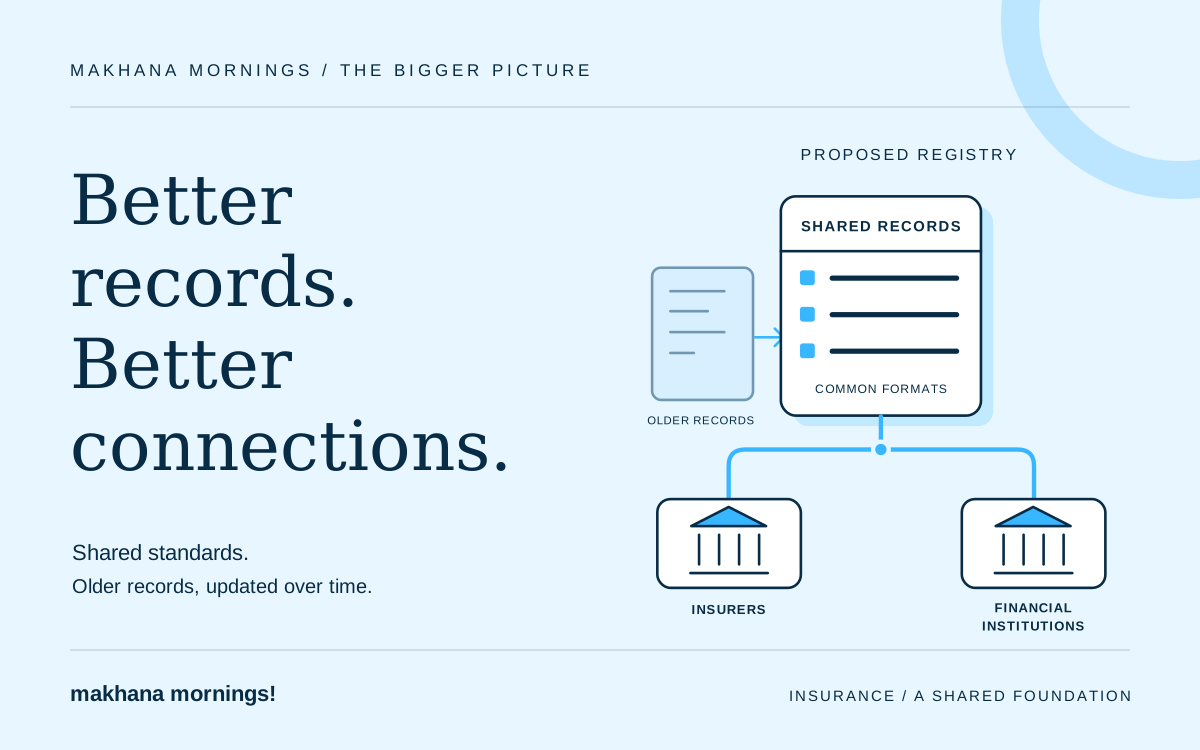
That is the idea behind the proposed Public Insurance Registry, or PIR. India’s insurance regulator, IRDAI, is discussing January 2028 for a beta, or test version. Chairman Ajay Seth set out that target on October 15. The longer-term aim is to make insurance records easier to check, compare and share.
The Breakdown
Seth spoke at the SamvAAd 2026 India Open Finance Summit in Mumbai. Under the proposal, the Insurance Information Bureau would become a not-for-profit company. It would host the registry.
January 2028 is a target under discussion for the first test version. Seth did not set a date for a full rollout. The planned features are still goals for the project.
Seth said insurers do not always collect and store data in the same way. PIR would help set shared formats and rules. These would help insurers and other financial firms exchange records they can all understand.
Feedback on the PIR consultation paper is due by October 17. The earlier deadline was September 30. That means people can still comment on the proposed design.
Why This Matters
A digital record is more useful when another firm knows what each part means and can check it. Shared standards can save work spent matching records that use different formats. They can also make it easier to compare the data.
PIR would have a different role from Bima Sugam, the proposed insurance marketplace for customers. Bima Sugam is meant to help people buy insurance. PIR would provide a shared way to find and exchange data. Businesses, financial firms and services used by customers could draw on it.
Customers could get a clearer view of products and how insurers and distributors perform. That could help them choose a policy. But a registry alone cannot ensure the right cover, a lower premium or a certain result when someone makes a claim.
Much will depend on the rules. Who can see which records? What permission will they need? How can a wrong record be fixed? These details will help determine whether easier data sharing builds trust.
The Big Picture
The work goes beyond launching software. Older records also need to be brought into a more consistent form.
Seth said that would take time. Insurers could update older customer details when policies are renewed or claims are made. His approach would set standards for new data while improving existing records over time.
Testing can begin while the data is still being made more complete and consistent. That makes the changeover important. Watch which uses the beta supports, which firms take part and how they handle older records.
The Crunch
PIR aims to make sound insurance records easier to find and use. January 2028 is a target for testing. Its value will depend on data quality, safeguards and whether firms can use the records reliably.