
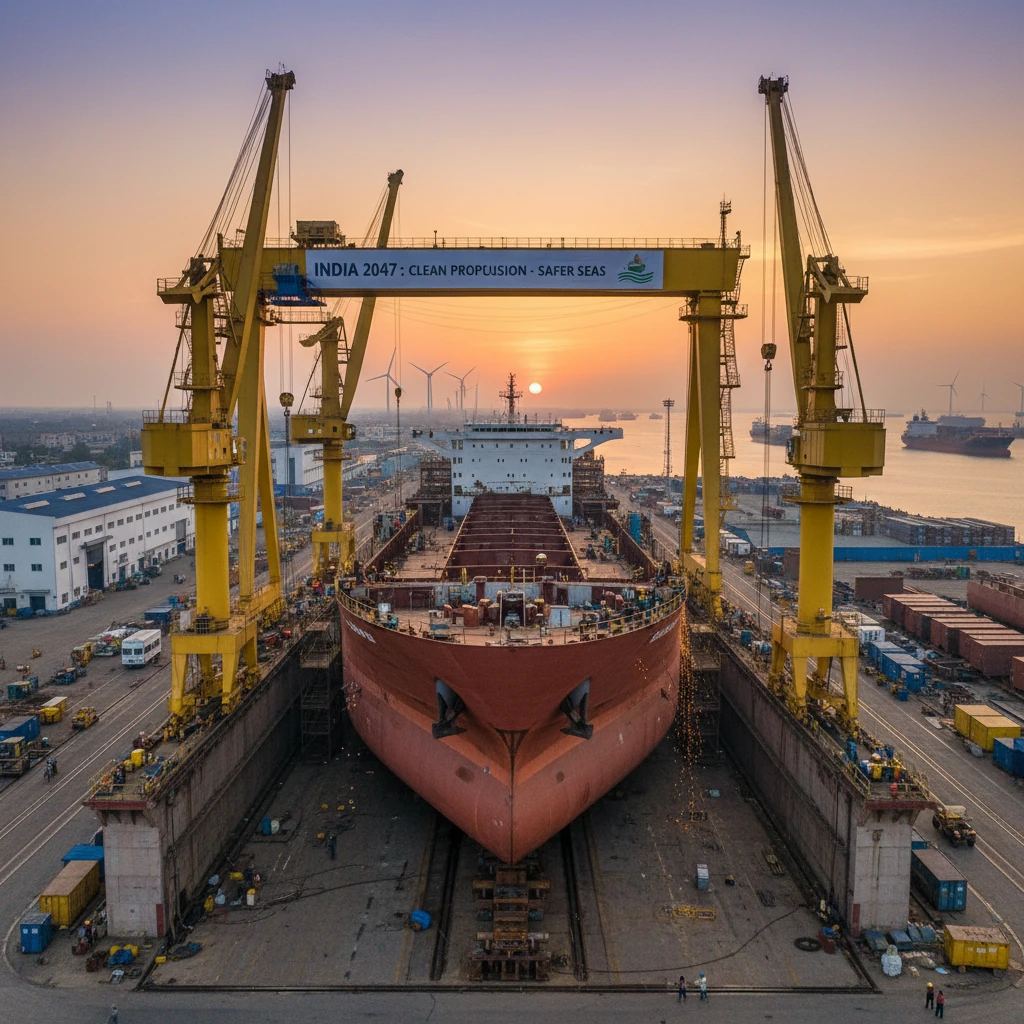
India sits on a long coastline yet ranks around 16th in global shipbuilding with less than 1 percent share. Most commercial vessels are still imported while domestic yards run below capacity. Maritime Vision 2047 and a new National Shipbuilding Mission mark a pivot. The plan is to move into the global top ten by 2030 and the top five by 2047. The question now is execution at scale and speed.
Breakdown
Context:
East Asia built dominance through patient policy, credit support, and integrated supply chains. India excelled in naval programs but commercial yards faced thin order books, old infrastructure, and cost gaps. The result was a cycle of few orders, low scale, and weak price competitiveness.
India’s edge and the gap:
Advantages include lower labor costs, location on major routes, and deep naval design know how. Constraints include capital intensity, import dependence for key components, and productivity gaps. Modernization and local supply chains are essential to close the cost and delivery gap.
What policy is doing now:
The National Shipbuilding Mission allocates Rs 70,000 crore and aligns ministries. Financial Assistance and customs duty relief lower costs. A Maritime Development Fund offers long term credit. Infrastructure status improves access to finance. Domestic procurement preferences and Right of First Refusal create a base pipeline. Eight coastal clusters and an India Ship Technology Centre aim to build design and supplier depth. Oil and Gas PSUs have aggregated orders for over one hundred vessels, giving yards multi year visibility.
What’s next:
Hit the 2030 top ten milestone through yard upgrades, lean project execution, domestic component manufacturing, and skilled workforce expansion. Use green vessel technology to differentiate and target replacement demand worldwide.
Why This Matters
Shipbuilding drives jobs across welders, designers, and marine engineers. It pulls steel, electronics, and heavy industry, reduces foreign exchange outflows, and strengthens logistics resilience. A credible domestic base improves national security and supply chain autonomy. Success would signal that India can scale complex manufacturing, not only services.
The Big Picture
This push fits a wider shift toward manufacturing leadership under Make in India and Atmanirbhar Bharat. The 2047 target aligns with the independence centenary and requires consistent policy through cycles. Global supply chains want alternatives to single country concentration. If India couples policy stability with competitive delivery, it can win both domestic and export orders, especially in cleaner propulsion and retrofits.
The Crunch
The framework and demand are in place. The test is execution over decades. Modern yards, reliable component ecosystems, disciplined schedules, and competitive financing must become the norm. Each vessel delivered by Indian yards is capability gained and currency saved. Each vessel imported is opportunity lost. By 2047 the scoreboard will be unambiguous.