
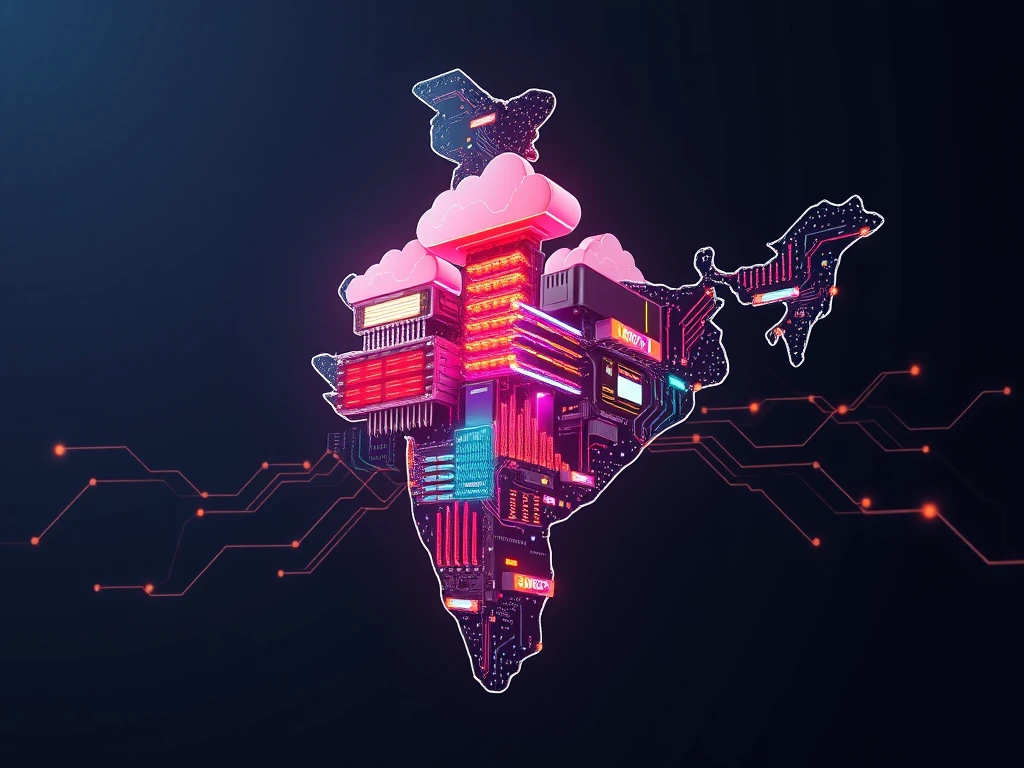
Sovereign AI is no longer a buzzword in India. It is becoming a full blown movement. At the Bengaluru Tech Summit, two of the country’s most ambitious AI builders, CoRover and Neysa, came together to spell out what this future looks like. It is a world where India controls its own models, its own GPU clouds and its own data centres, without depending on foreign hyperscalers. It is also a world where Indian languages and Indian use cases stop being an afterthought. The conversation made one thing clear. India now wants its own stack, end to end, and there are companies already building it.
Breakdown:
The panel, moderated by Ravi Jain of TDK Ventures, began with a simple observation. The last three years of AI evolution have delivered more change than two decades of earlier progress. Foundation models, small edge models, AI clouds and even early quantum experiments are all emerging at once. Against this backdrop, India’s urgency around sovereign AI has grown.
CoRover founder Ankush Sabharwal explained how the company is building sovereignty from the application layer upward. CoRover began as a conversational AI platform, but now operates across the full stack with enterprise ready models and no code agentic platforms. More than fifty thousand developers and enterprises have already used their tools to produce thousands of AI agents. Their latest move is a partnership with Intel to launch BharatGPT Mini for edge deployments, allowing sovereignty to extend into low power and offline environments.
Neysa is building the infrastructure side. Karan Kirpalani described it as a new kind of AI cloud with a single aim: let Indian companies use their AI faster, cheaper and at scale. Neysa’s pitch starts with sovereignty and cost savings. One customer processed four hundred ten billion tokens a month at a cost that global hyperscalers could not match. Neysa provided equal performance with lower latency and delivered it at domestic pricing. Through its Velocis cloud, the company aims to reduce India’s dependence on foreign GPUs, foreign clouds and foreign models altogether.
To support this mission, Neysa is constructing a four hundred megawatt AI data centre with NTT that can host twenty five thousand GPUs. Kirpalani said the goal is simple. India cannot afford to be exposed to geopolitical shocks. GPU supply chains can break, but they can also be rebuilt if the country has its own infrastructure. He acknowledged that most of the stack still runs on NVIDIA because CUDA is the real moat. But he believes India will still win because local builders understand local use cases better.
Sabharwal shared how BharatGPT handles Indic languages and slang with greater nuance, often outperforming global models in Indian contexts. CoRover’s Hindi model even handled Bhojpuri without being specifically trained for it. This is the value of deep local usage rather than general purpose training. He revealed that global companies sometimes use CoRover’s APIs for Indian deployments.
The broader theme was clear. For India to scale AI adoption, developers, model builders, clouds and data centres all need to move in sync. Data centres take years to build, so they must stay ahead of demand. Model builders need edge ready options. Enterprises need affordable and sovereign compute. And citizens need applications that work across languages and real world constraints. India’s advantage lies in its population scale and its appetite for new technology. As Sabharwal put it, India produces data by just living life.
Both leaders agreed that AI will eventually fade into the background, becoming as ordinary as 4G once was. People will use AI dozens of times a day without realising it. Banks, call centres, government services and consumer apps will all run AI behind the scenes. Clouds like Neysa will power this shift quietly, and platforms like BharatGPT will shape how Indians interact with it.
Why this matters:
Sovereign AI is becoming a strategic necessity. Nations want control over their compute, their data, their models and their infrastructure. India’s population scale, linguistic complexity and rapid digital adoption make a one size fits all global model impossible. Local stacks are not just a matter of pride but a matter of resilience and affordability. This shift determines who controls the next decade of economic growth and technological momentum.
The Big Picture:
The global AI race is splitting into two layers. Mega models built by global giants and national stacks built for local languages, regulations and sovereignty. India is choosing the second path with increasing clarity. As compute costs rise on global clouds, countries will double down on their own infrastructure. The winners will be ecosystems, not companies.
The Crunch:
India does not want to rent the future. It wants to build it, And the foundations are already being poured.