
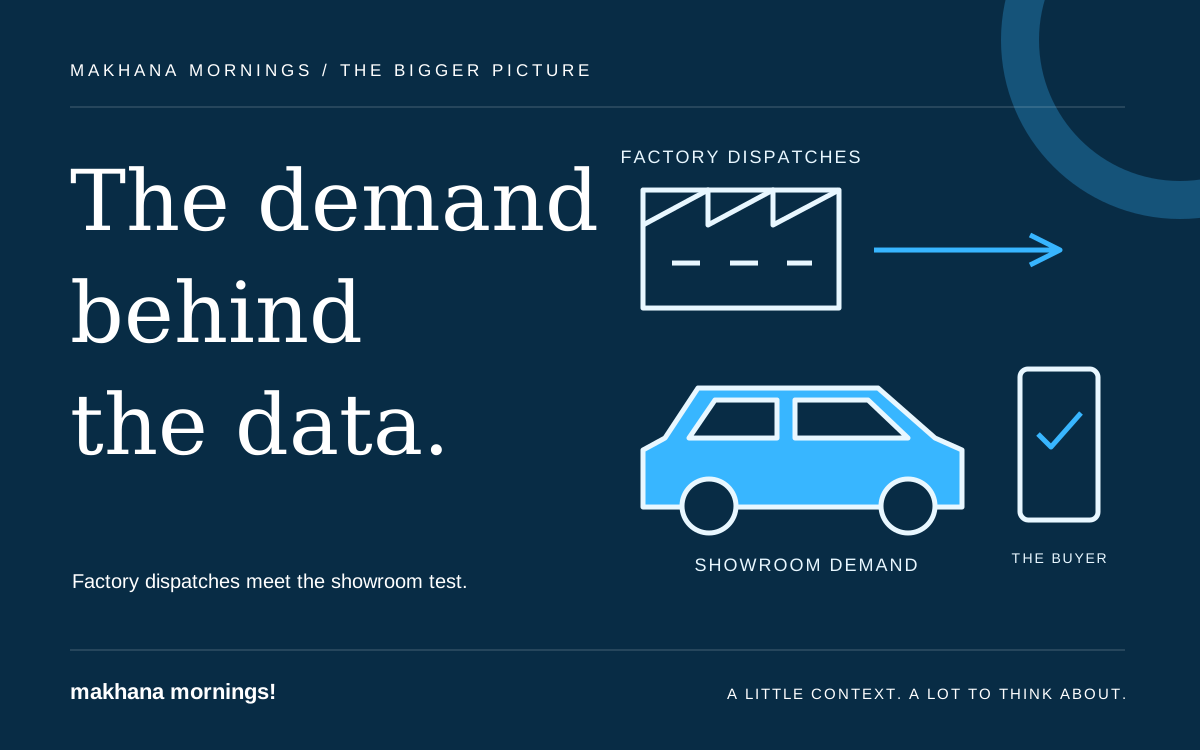
The latest industry figures show the highest July–September dispatches yet across passenger vehicles, two-wheelers, three-wheelers and commercial vehicles. For factories, suppliers and dealers, that is a substantial expansion in business.
The numbers released on October 15 also come with a timing lesson. Last year’s GST transition disrupted purchases before lower rates took effect. This year’s growth is being measured against that uneven starting point. As the comparison shifts towards the stronger months that followed, annual growth rates may moderate.
The Breakdown
Domestic dispatches across the four main segments reached about 83.88 lakh vehicles in the second quarter of FY2026–27, up 18.2% from a year earlier.
Passenger vehicles led the growth rate, rising 30.7% to 13.61 lakh. Two-wheelers accounted for the largest volume, at 64.33 lakh, up 15.2%. Commercial vehicles grew 28.7%, while three-wheelers rose 23.6%.
The reported series excludes BMW, Mercedes, JLR and Volvo Auto from passenger vehicles, and Daimler from commercial vehicles. These factory-to-dealer movements also sit at a different stage of the sales chain from retail registrations. Dispatches alone do not establish delivery to the final buyer.
There is already encouraging evidence from that end of the chain. September passenger-vehicle retail reached 4.27 lakh units, up 32.1% year-on-year. Last September’s delayed purchases ahead of the GST change also inflated the annual comparison.
Passenger-vehicle dealer inventory was estimated at around 43–45 days at September-end, about five days above August-end, as dealers stocked up for the festivals. That makes the pace of showroom sales worth watching even after a strong retail month.
Dispatches and retail registrations cover different reporting populations and timings, so subtracting one from the other would not produce a reliable inventory estimate.
Why This Matters
For an auto-component supplier, a busier factory can mean larger orders and more production shifts. For a dealer, the important question is how quickly the particular models on the forecourt find buyers. A rising industry total cannot answer both questions equally well.
The product mix also matters. Scooter dispatches grew 27.7% during the quarter, compared with 7.4% for motorcycles. A business supplying one category could be experiencing a very different market from a business supplying the other.
That is why planning around a single national growth rate can be misleading. Order books, model availability, cancellations and the time taken to sell stock give businesses a closer view of their own demand.
The Big Picture
The domestic expansion also sits alongside a softer passenger-vehicle export result: shipments abroad fell 5.2% to about 2.29 lakh in the quarter. Exports of two-wheelers, three-wheelers and commercial vehicles increased. A strong home market therefore does not establish that every route to growth is improving together.
For the coming months, the base effect deserves particular attention. When an unusually weak comparison drops out, growth can slow even while the number of vehicles sold remains healthy. Equally, a favourable comparison can make a modest improvement look spectacular.
The sensible test is to read the growth rate alongside actual volumes and showroom activity. That makes it easier to distinguish a change in demand from a change in the arithmetic.
The Crunch
Watch the October–December numbers for three things: retail volumes, dealer stock levels and the differences between vehicle categories. Keep export performance alongside them.
India’s auto market has delivered a strong quarter. The next useful question is how that strength holds up as last year’s post-GST surge enters the comparison.