
The government isn’t leaving GST cuts to chance. With new lower tax rates kicking in from September 22, the Finance Ministry has instructed Central GST field officers to closely monitor whether prices of everyday items actually come down. In a letter sent this week, officers were directed to track brand-wise Maximum Retail Price (MRP) data on 54 commodities, including butter, thermometers, and toys, and file monthly comparative reports to the Central Board of Indirect Taxes and Customs (CBIC).
The aim: ensure consumers see the benefit, not just companies’ bottom lines.
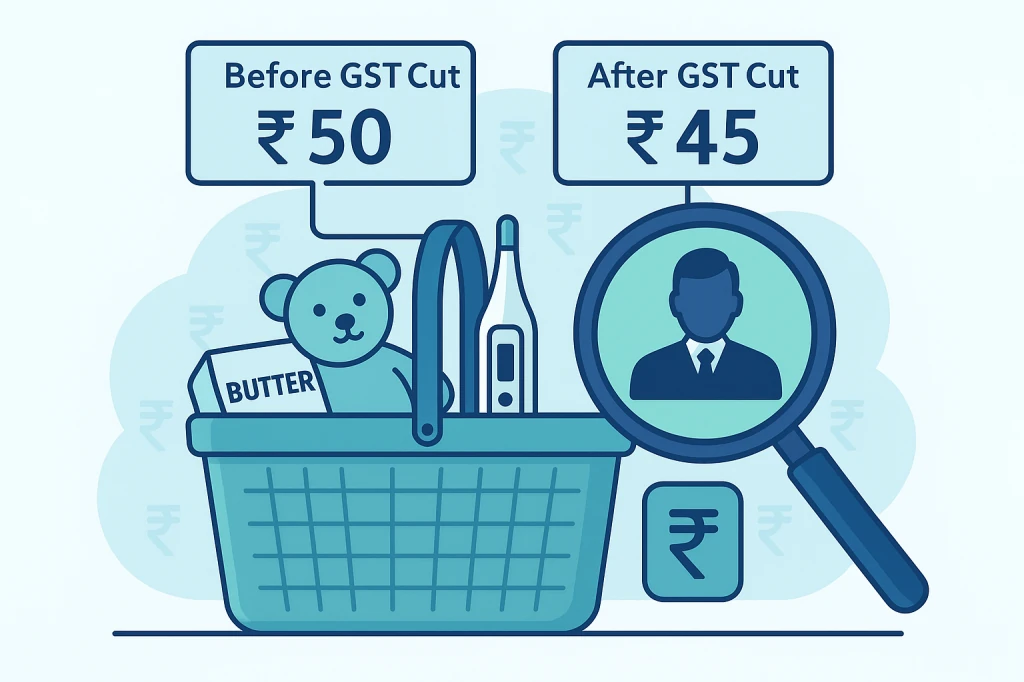
The New Directive
- Field offices must submit the first comparative report by September 30.
- Reports will capture pre- and post-September 22 MRPs, item by item and brand by brand.
- Submissions are due monthly until March 2026, with the 20th of each month as the deadline.
Items Under Watch
The 54 products include household staples like butter, packaged food, thermometers, toys, and other daily-use items.
Why It Matters
- For consumers: Ensures GST relief is passed on as lower shelf prices, not absorbed as higher margins.
- For businesses: Adds compliance pressure to justify pricing strategies in the wake of tax cuts.
- For policymakers: Provides real-time data on whether tax tweaks are translating into relief on the ground.
The Bigger Picture
As GST 2.0 reforms roll out, the government is signaling that price oversight will be active, not reactive. With inflation management high on the policy agenda, these monthly audits could shape both public trust in the tax regime and the political narrative around consumer welfare.